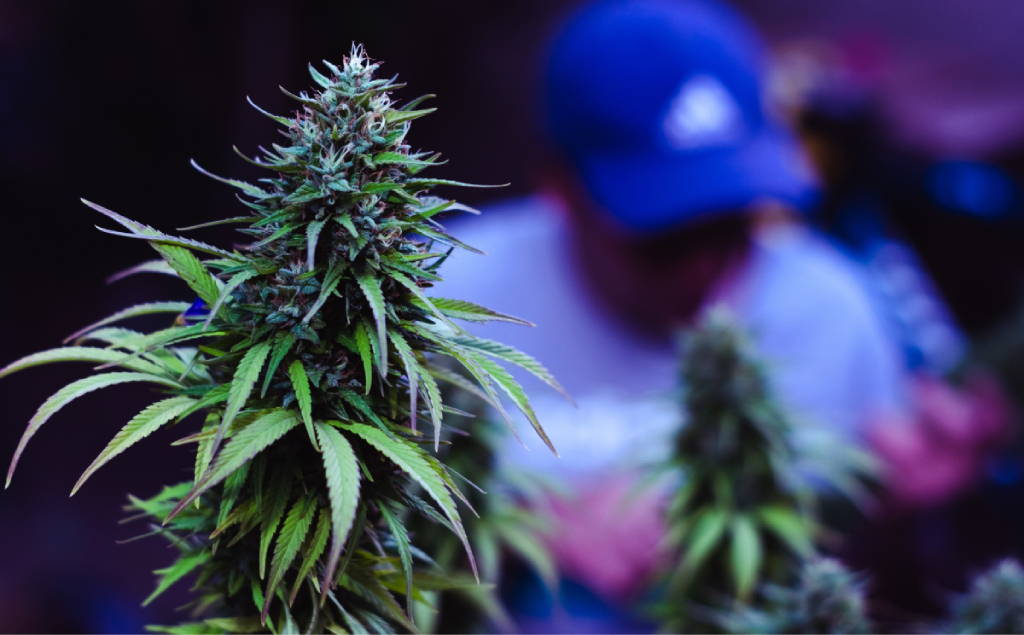
Cannabis Flower & Divergent Thinking: Fact, Fiction, and the Science Behind Creativity
A blank screen has the cursor blinking. At 2 AM, a painter gazes at a blank canvas. An artist repeats the same chord for the twentieth time. Many hands are stretched to a time-tested solution in that moment of frustration.
Cannabis Flower is the silent companion of many creative rituals over centuries. In the 1940s, jazz musicians vowed to do so. Beat poets created myths about it. Its idea-generating qualities have been murmured over by coders of Silicon Valley.
But this is the actual question.
Does Cannabis Flower really enhance divergent thinking and creativity? Or is that but a sweet fiction that is perpetrated so often it has become reality?
Response: According to existing evidence, Cannabis Flower is not a consistent predictor of quality of creative output. It may enhance the fluency of ideas (more raw ideas) but tends to decrease the relevance, accuracy, and structured usefulness of the ideas. The sense of creativity grows more steadily than quantifiable creative achievement.
That distinction matters. This article discusses science, the myths, and the grey zone between perception and reality. You will find out how Cannabis Flower engages with the creative brain, why sensory amplification seems to be an inspiration, and how to go about this convergence with real insight instead of romanticized fiction.
Getting to know about Divergent Thinking and Creativity
What is Divergent Thinking?
Divergent thinking implies coming up with a multiplicity of solutions to the same starting point. The most traditional one is brainstorming. An individual enumerates all the applications of a brick that he/she can think of. Convergent thinking, on the contrary, reduces the possibilities to only the best answer.
Creativity requires both. Raw material comes in the form of divergent thinking. It is molded into something useful by convergent thinking.
Examples of divergent thinking in action:
- Writing and not rewriting.
- Sketching ten thumbnails for one logo
- What we play, we do without critiquing.
- Enumerate wild solutions to a business problem.
Brain Processes of Creativity
The prefrontal cortex is the conductor of the brain. It orchestrates cognitive flexibility, attention, and working memory. Dopamine is a neurotransmitter that relates to reward and motivation, which is a supportive factor. The increase in dopamine activity may enhance the number of associations that an individual has.
However, this is the key difference. The neural circuits involved in idea generation and idea evaluation are different. Loose and unfiltered associations are useful in generating ideas. To test ideas, one needs to use focused inhibition, which implies the capacity to eliminate bad ideas fast.
The impact of Cannabis Flower on these systems varies. It is able to loosen associations (assisting generation) and, at the same time, damage inhibition (damaging evaluation).
The Importance of This to Cannabis Research
Since creativity can be measured in the laboratory, researchers can divorce subjective emotions and objective performance. That is the sole means of overcoming anecdotes.
A musician may be more creative once he or she uses Cannabis Flower. But does the feeling amount to better melodies, tighter lyrics, more novel arrangements? The study poses a complex solution.
The Science of Cannabis Flower and the Creative Brain: What Science Suggests.
Key Scientific Findings
There is peer-reviewed research on Cannabis Flower and creativity that has generated inconclusive yet educative findings. A number of controlled trials (listed on PMC and other such databases) demonstrate that moderate levels of THC dosage lead to improved verbal fluency – people produce more associated words in a timed test.
The same studies, however, indicate worse performance on tasks that demand sustained attention, working memory, and logical sequencing. The trade-off is regular.
Astonishingly, low doses have different effects than high doses. A meta-analysis of 2021 concluded that very low levels of THC (less than 5mg inhaled) did increase divergent thinking scores very slightly in occasional users. The higher doses affected performance in almost all measures in a negative way.
Cognitive vs THC vs CBD and Cognitive Effects
The major psychoactive in Cannabis Flower is THC. It interacts with CB1 receptors in the brain, modifying perception, memory retrieval, and associative thought. CBD, on the other hand, is not intoxicating. It has no high production and does not impair cognitive functioning directly.
High Tetrahydrocannabinol and low Cannabinol are present in most Flower Cannabis sold nowadays. Such a ratio is important to creativity. Raw THC is more likely to augment cognitive noises. A balanced flower (containing meaningful CBD content) can result in a lower number of attention deficits.
Contrasting Thinking When under the Influence of Cannabis
The data on greater idea generation is factual but limited. With moderate THC, an individual may enumerate additional ways of using a brick. The more important thing is, though, that those uses are also more inclined to be non-practical, redundant, and absurd.
Weakened filtering enables us to feel creative as the inner critic is silent. But there is a purpose for such a critique. It divides the brilliant and useless.
Key Insight
Cannabis flowers can alter the mode of thinking instead of enhancing uncooked creative power. It is pro-quantity, pro-association, pro-exploration, and less pro-refinement. It may be helpful during certain stages of creative activity and destructive during others.
Fiction vs Fact Breakdown
Fiction: “More cannabis equals more creativity.”
Fact: Higher doses consistently impair cognitive performance. Low doses produce modest, inconsistent effects.
Fiction: “Cannabis makes everyone more creative.”
Fact: Approximately one-third of users report no creative benefit. Another third reported impairment. The remaining third report mixed or situational benefits.
Fiction: “The creativity boost is permanent with regular use.”
Fact: Tolerance develops rapidly. Frequent users report diminished creative effects over time, not enhancement.
Balanced Conclusion
Cannabis Flower is a cognitive modulator, not a creativity engine. It changes the parameters of thinking—sometimes helpfully, often not. The outcome depends entirely on the user, the dose, and the task.
High Potency Cannabis Flower Effect on Frequent Users
Tolerance changes everything. An individual who consumes Cannabis Flower on a daily basis becomes accustomed. CB1 receptors are downregulated by the brain. Less effect is obtained on the same dose.
There are implications of that adaptation on creativity.
Regular users report:
- Less newness of cannabis-induced thoughts.
- Less perceptual distortion
- Reduced creative sparkness than when first used.
Strains with high-THC concentration (more than 20% ) enhance mental drift- the wandering of thoughts without a specific direction. There is a decline in working memory. It is more difficult to maintain concentration.
Comparison: light users have greater perceptual changes and more intense idea generation. Regular users receive a watered-down version of the two effects.
There is a cognitive trade-off that exists. Increased loose associations do not equate to increased well-structured creativity. One may come up with ten ideas, but cannot develop them beyond the initial sentence.
Cannabis and Sensory Perception: The Artistic Amplifier.
Heightened Sensory Awareness
Music sounds richer. Colors are more saturated. The textures are more elaborate. These are some of the actual effects of THC on the sensory processing areas of the brain.
Temporal distortion is another factor. Time may be slower or faster. To a musician, twenty minutes of exploration could be a three-minute song. To a painter, an hour of brushwork may be ten minutes.
Emotional Amplification
Cannabis Flower enhances the emotional reaction to art. A song one knows could make one shed tears. A movie scene could be agonizingly deep. Introspection deepens.
Relation to Artistic Expression.
Report many painters, musicians, and writers:
- Greater engagement in the process of creativity.
- Greater experimental, risky production.
- Less self-criticism in first drafts.
Scientific Interpretation
Creativity may be indirectly affected by sensory enhancement. When music sounds more fruitful, a composer may hear new possibilities. When colors appear brighter, a painter could be bolder.
Nevertheless, the interpretation is still subjective. The composer still requires technical ability to notate those new ideas. Those risks require brush control to be performed by the painter. Cannabis Flower is not offering such abilities.
Real User Intent: The Real-World Interplay of Cannabis and Creative Processes.
There is nothing like creativity. It has phases. And Cannabis Flower affects each phase differently.
Ideation phase (generation of raw material): This is where Cannabis Flower might come in. Brainstorming. Freewriting. Sketching without judgment. Breaking mental rigidity. The relaxation of associations may give surprising associations.
Execution stage (editing, refining, structuring): here, Cannabis Flower is usually a victim. Proofreading. Mixing tracks. Revising a draft. Logical structuring. The activities involve long-term attention, working memory, and inhibition, which are affected by THC.
Key point: Cannabis Flower can be used to explore, but not execute. Apply it at the chaotic, generative stage of creative activity. When accuracy and form are important, lay it aside.
Myths vs Facts: Cannabis and Creativity Debunked
Myth 1: Cannabis has a direct effect of increasing intelligence or creativity.
Fact: No support for long-lasting cognitive enhancement. Effects are short-term and contextual.
Myth 2: All great artists rely on cannabis for inspiration.
Fact: Creativity is not dependent on anything. There are numerous famous artists who did not use cannabis. Others only used it sparingly or abandoned it altogether.
Myth 3: The greater the THC, the greater the ideas.
Fact: More THC means more cognitive noise- the more irrelevant thoughts, distraction, and less focus. Lower doses are better placed to give helpful effects.
The scientific consensus that is most balanced: the effects are situational, short-lived, and extremely personal. There is not a single study that has indicated that Cannabis Flower can cause an individual to become more creative in any permanent or generalizable manner.
Conscientious and Informed: How to be creative using Cannabis Flower
Here, more than in almost any other place, set and setting principles come into play. The environment is even greater than the substance itself. A known, comfortable studio has more chances to deliver the results compared to an unknown and nervous environment.
The deliberate use of creativity implies:
- Cannabis Flower Use: Use Cannabis Flower only in the ideation sessions, but never in execution.
- Using it along with active creative tools (journaling, voice memos, sketching)
- Establishing a definite objective of creativity prior to consumption.
It is important to escape cognitive overload. Only creative work with low doses. One must experience a slight change but not a loss of consciousness. Watch tolerance accumulation–daily use lessens creative influences.
There are healthy, creative substitutes, which are not to be disregarded:
- Meditation (divergent thinking is enhanced by open-monitoring styles)
- Flow-state (clear goals, immediate feedback, challenge-skill balance) techniques.
- Planned brainstorming techniques (SCAMPER, mind mapping, random word association)
Conclusion – Fact, Fiction and the Middle Ground.
Cannabis Flower affects perception and associative thinking. That is real. Nevertheless, it is not a sure way of creating something better. That is fiction.
Divergent thinking can be affected – more ideas, more loosely coupled. But to be influenced is not to be improved. It is the mind that is the actual creative power. Cannabis Flower is merely a prism, not a source.
An individual who tries to make breakthroughs in creativity must be aware of his/her cognitive base first. Experiment deliberately. Document results honestly. And understand that the surest creative instrument has been and ever will be to turn up and get the work on–substance or no substance.
And those who want to venture into this intersection without going off-road, go to a reputable Cannabis shop in your area – order the menu at Stellar Dispensary and order terpene profiles that are focus or ideation-friendly. The experts of Stellar Dispensary in Newburgh can be of assistance in terms of matching Cannabis Flower strains with personal creative objectives.
Frequently Asked Questions
Q1. Does cannabis flower smoking make everybody more creative?
Ans. No. It depends on dose, tolerance, personality, and task type. About a third of users report no benefit. The other third reports impairment. The other third report was mixed or situational effects. No creative enhancement is universal.
Q2. What are the most effective strains of cannabis flower to use in creative thinking?
Ans. In most cases, low-THC, terpene-laden strains have been reported as less impairing in comparison to high-THC ones. Find Cannabis Flower that has limonene (citrus, mood-elevating) or pinene (alertness, memory retention). Strains should not be used to create creative work until one is extremely tolerant, and then not exceed 15-18% THC.
Q3. Will cannabis flower overcome writer’s block?
Ans. Periodically, to create raw ideas in the ideation stage. Low-dose influence can shortcut the inner critic when freewriting occurs. Nevertheless, Cannabis Flower tends to be hazardous to edit, to structure, or to proofread. Write selectively and only sparingly–and only in the preliminary draft.
Q4.Is cannabis really enhancing creativity, or is it just a perception?
Ans. The sense of creativity is authentic. Individuals truly have more associations, an increase in sensory awareness, and decreased self-criticism. Nonetheless, quantifiable creative performance (quality of ideas, utility of solutions, technical performance) does not always get better in research. The feeling and the outcome are different things.